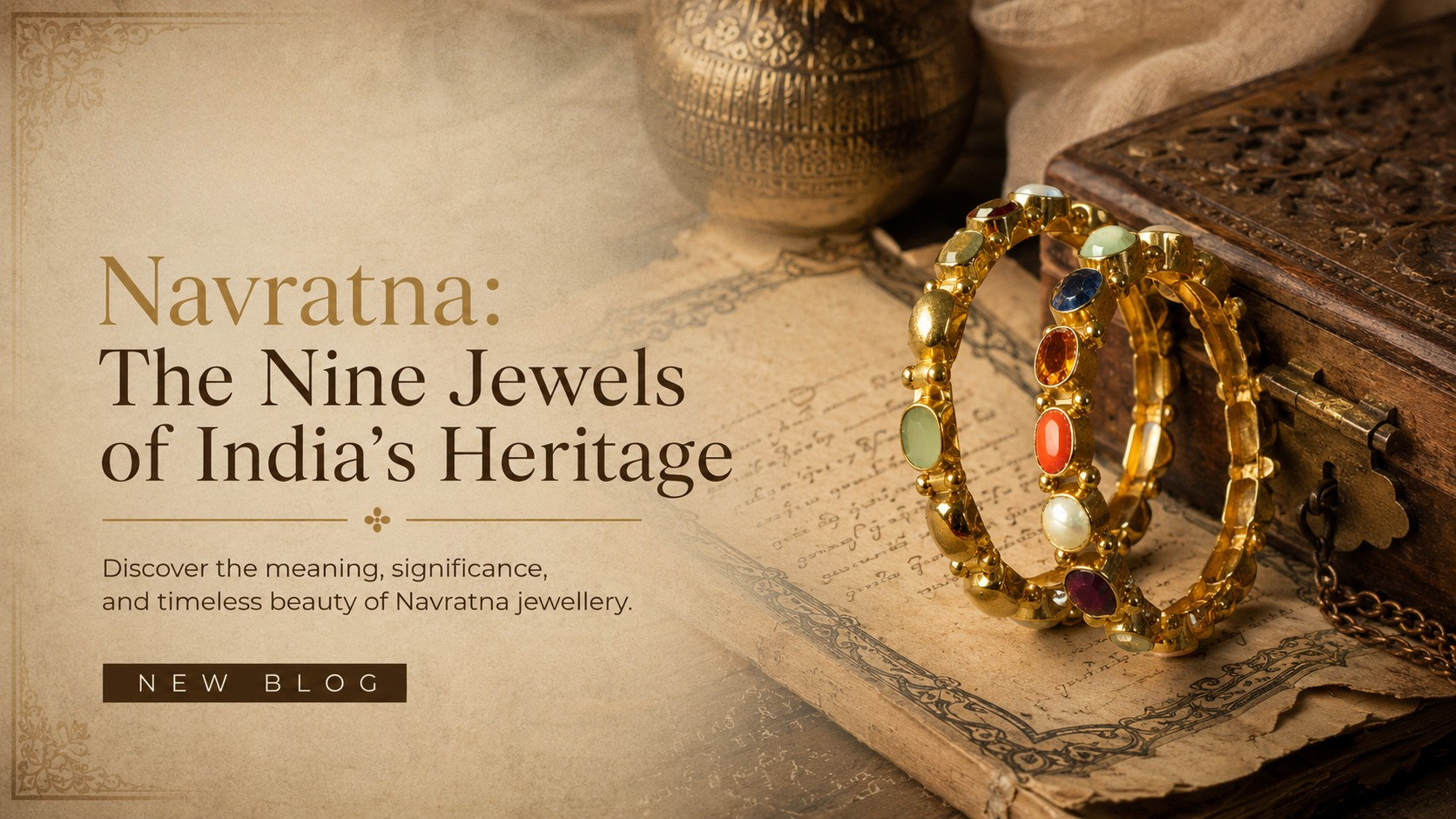
The idea of Navratna, or “Nine Jewels,” has long been connected to India, a country rich in culture and history. This phrase has been employed in a variety of situations, including historical royal courts, astrology, and Ayurveda. Let’s look at the various interpretations and meanings of Navratna in Indian tradition.
One of the most notable references to Navratna comes from the Mughal and Rajput courts, particularly during Emperor Akbar’s reign. Akbar’s Navratnas were nine outstanding intellectuals, poets, and counselors who made significant contributions to politics, literature, and the arts.
Navratna is also related with nine valuable gemstones, each of which represents a heavenly body in Hindu astrology. Wearing these stones together is thought to offer balance, wealth, and protection.
Depicts the Sun and represents strength and confidence.
Is associated with the Moon and promotes emotional stability.
Is associated with Mars and represents strength and courage.
Represents Mercury and improves intelligence and communication.
Represents Jupiter, who promotes wisdom and fortune.
Is connected to Venus and enhances luxury and beauty.
Represents Saturn, which promotes discipline and attention.
Is associated with Rahu and protects against negative energy.
Symbolizes Ketu and brings spiritual enlightenment.
Each gemstone is said to have unique healing and astrological benefits, making Navratna jewellery popular for its spiritual significance.
Navratna designs are available in a variety of formats, including:
During the nineteenth century, the great Indian painter Raja Ravi Varma created many Maharani portraits embellished with Navratna jewellery. These paintings depict queens and noblewomen wearing Navratna sets to represent prosperity, cosmic protection, and supernatural favors.
Thailand’s Royal Order of the Nine Gems, founded by King Rama V in 1895, is one of the most revered and distinguished orders bestowed upon royals and high-ranking officials. This tradition stems from Indian beliefs about the cosmic power of the nine stones. Even today, Thai royalty values Navratna jewellery as a symbol of absolute power.
Even in the 1980s, wealthy families and Bollywood elites preferred Navratna jewellery, which was seen as a lucky charm for fortune and success.
Navratna jewellery is extremely important in Indian culture and is worn for both aesthetic and spiritual purposes. The arrangement of nine jewels in a single piece is thought to channel cosmic energy and bring harmony into the wearer’s life.
Rings, pendants, bracelets, and necklaces are popular items made of these jewellery components, which are frequently set in gold or silver. Aside from its astrological benefits, Navratna jewellery is prized for its vivid and stunning design, making it a classic addition to any jewellery collection.
Navratna is extremely important in Indian culture, whether in history, astrology, health, or business. From the splendor of Akbar’s palace to the magical power of gemstones, the significance of Navratna has evolved through generations.
This ageless philosophy is profoundly established in India’s cultural and spiritual fabric, continuing to inspire people through its rich symbolism, beauty, and timeless relevance.
WhatsApp us